I have been actively exercising since March 2015. At the time I started my workout program, my knowledge about training was minimal. As I took more fitness classes at a gym, I found the best training for myself and generated my own training plan. Now I want to share my training plan with you so that you may extract the points that you think will be helpful.
Before you officially start your workout, you need to set a goal. For example, think about whether you are planning to lose weight, gain weight, or gain muscle mass. If you don’t know whether you are overweight or underweight, you can calculate Body mass index (BMI) to measure your body fat based on your weight and height. This number can help you to determine your goal for working out.
To lose weight, the calorie intake should be less than the calories you consume. To the contrary, to gain weight, the calorie intake should be greater than the calories you consume. Personally, I suggest you download MyFitnessPal, an app that calculates your daily calorie requirement according to your goal and keeps track of your calorie intake. I started using the app two months ago. With the app, I got significant results for managing my weight.
You have to control both your diet and exercise to change your weight. Many people report no results when they are trying to manage their weight. This is because they either have too much calorie intake or didn’t burn enough calories. To control your calorie intake, I highly recommend using the app to track your dietary intake. To burn calories faster, working out is the best option. Below is my personal workout plan. No matter what your workout goal is, this can help you reach out your optimal weight. This is not a professional plan, but it gives you a guideline for your training.
30-minute Warm-up on a Treadmill
Your walking/running speeds will depend on your comfort level. I usually start with walking at 4mph for 0.4miles, which takes about 8 minutes. Then, I jog at 5.5mph for 0.5mi, which takes about 5 minutes. Next, I sprint at 6.5-7mph for 0.25mi, which takes about 3 minutes. After boosting my running speed, I slow down gradually back to 5.5mph for another 0.5mi recovery, which takes another 5 minutes. Finally, I lower my speed gradually back to walking and cool down my body at 2.5mph, which takes about 8 minutes.
Running at 6.5-7mph for 0.25mi is about my maximum sprint speed. These 3 minutes help me burn out fat faster and gain more muscle strength. Many people pre-set an interval training mode (alternating between high and low speeds) on their treadmill, which is designed with the same purpose.
45-minute Strength Training Followed By Running
I adjust the intensity of my workout according to how my body feels. Don’t overdo on your strength training; you could hurt yourself. According to the American College of Sports Medicine, the lowest intensity strength training should consist of eight to twelve repetitions for each of the eight to ten exercises, two days a week. The following training activities are listed in the order they are performed.
- Curl up: 20 repetitions with no weight, 10 repetitions with holding a 15lb dumbbell against chest
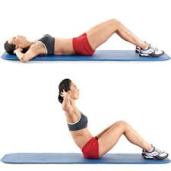
- Reverse crunch: 12 repetitions
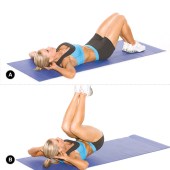
- Bicep curl: 10 repetitions with two 15lb dumbbells
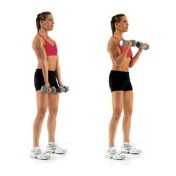
- Overhead dumbbell lift: 10 repetitions with two 15lb dumbbells
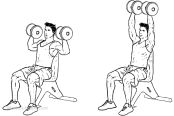
- Tricep curl: 10 repetitions with one 15lb dumbbell
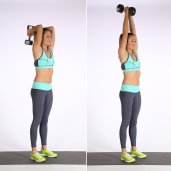
- Bicycle crunch: 1 minute
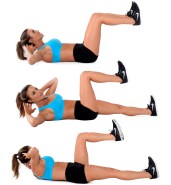
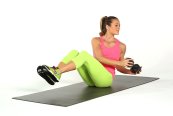
- Hip lift: 2 minutes

- Russian twist: 1 minute with a 15lb dumbbell
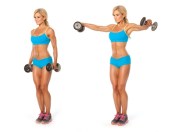
- Side dumbbell lateral raise: 10 repetition with two 12.5lb dumbells
- Donkey Kicks with Doggy Hydrants: 2 minutes
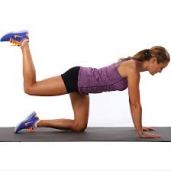
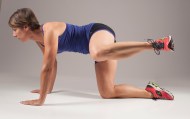
- Plank: 1 minute
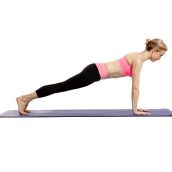
- Side plank: 1 minute for right side and left side respectively

- Squats: 20 repetitions holding a 15lb dumbbell against your chest
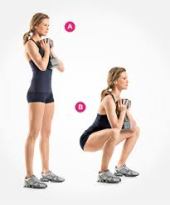
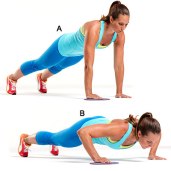
- Pushups: 10 repetitions
- Stretch out: 5 minutes

This list is my personal training plan that is made after I tried a variety of exercises, and my body feels the best by alternating the strength training of different muscle groups. You may try more exercises and conclude the best combination for your body, but the idea of using aerobic exercises to warm up, anaerobic exercises to improve strength and stretching to relax muscles should be retained. Combine all of the training types can make your muscle groups work most efficiently and avoid any unexpected injuries.
To find more relevant information about the three training types, please look over the first blog.
 Life Fitness